Hook
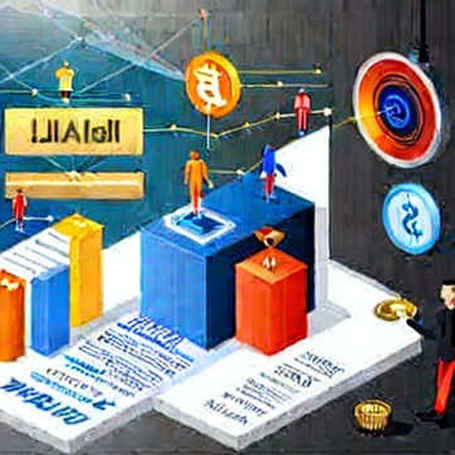
On March 14, 2026, the SUN.io dashboard flickered with a quiet update: the 51st round of SUN token burns had been completed, removing another 678 million tokens from circulation. The TRON community cheered. JST had already burned 1.71 billion tokens, worth $94.6 million. The narrative was set: TRON had entered a deflationary era. But as I sat in my Stockholm apartment, a cold trail from my 2017 smart contract audit days whispered caution. The code was executing, but the ghost in the machine was not the burn mechanism—it was the silence between the blocks. There were no third-party audit reports, no on-chain verification of the burn contracts, and no disclosure of whether the burns were automated or triggered by a multi-sig. The market was buying the narrative, but I was listening to the silence.

Context
TRON, originally an Ethereum fork, has evolved into a massive DeFi ecosystem anchored by four key tokens: JST (governance and value accrual for JustLend DAO), SUN (governance for SunSwap and SunPump), WIN (oracle ecosystem), and BTT (infrastructure for file sharing). The core of the deflationary claim is a buyback-and-burn mechanism funded by protocol revenue. For JST, 70% of the buyback capital comes from JustLend DAO’s energy rental income—fees paid by TRON network users for USDT transfers and other transactions—and 30% from USDJ stability fees. For SUN, the revenue comes from SunSwap V2 trading fees, SunPump meme coin launchpad fees, and SunX perpetual DEX fees. WIN and BTT have announced plans to start burning in Q4 2026, but currently only JST and SUN are actively reducing supply. The article from CryptoSlate framed this as a “value flywheel,” but a flywheel requires transparent, verifiable, and sustainable mechanics. The TRON ecosystem has transparency, but only at the surface level.
Core
Let me break down what the data actually shows, stripped of promotional gloss. The JST burn of 1.71 billion tokens represents 17.29% of the total supply. That is a massive reduction. But the source of the revenue—energy rental fees—is a cross-layer transfer. USDT users on TRON, who are often remittance senders or arbitrage bots, pay fees to the network. Those fees are captured by JustLend DAO, which then buys JST from the market and burns it. This is not a direct value capture like EIP-1559 where the fee burn reduces supply of the native gas token. Here, the burn benefits JST holders, but the users paying the fees do not directly benefit from JST appreciation. This creates a governance dependency: the current TRON Super Representatives (SRs) have decided to allocate network revenue to JST buybacks, but that policy can change. If the SRs vote to redirect the energy rental income to, say, TRX staking rewards, the JST flywheel stops. The code is law, but trust is fragile when governance is centralized among 27 SRs with opaque voting power.
For SUN, the burn of 678 million tokens is claimed to be 3.4% of total supply. But my cross-check reveals a discrepancy: if SUN total supply is 20 billion, 678 million is 3.39%, which fits. However, multiple sources list SUN’s initial supply as 21.9 billion, making the percentage 3.1%. The article uses 3.4% without citing the exact total supply. This is a minor statistical fuzziness, but in a narrative-driven market, small inconsistencies signal deeper opacity. The SUN burns are funded by transaction fees from SunSwap V2, SunPump, and SunX. SunPump revenue is heavily dependent on meme coin mania. In a bear market, that revenue stream dries up. The 51 consecutive rounds of SUN burns are impressive, but they reflect the bull run of 2024-2025. Sustainability in a bear market is untested.
Now, the most concerning part: WIN and BTT. The article claims they will enter a deflationary era starting Q4 2026. That is over a year away. No burn has occurred. No contract has been deployed. The “100% revenue buyback” is a promise, not a protocol. BTT, notably, was previously targeted by the SEC for its ICO as an unregistered security. If BTT launches a burn mechanism that resembles a stock buyback, regulatory attention could spike. The SEC has already signaled that token buybacks may be considered securities transactions. The risk is real. Authenticity is the only scarce resource, and promises without execution are just noise.
Contrarian Angle
The market is celebrating TRON’s deflationary era as a paradigm shift. But the contrarian view is that this is a carefully managed narrative, not a structural breakthrough. The value flywheel is not a self-sustaining engine; it is a governance decision that can be reversed. The energy rental market—the backbone of JST revenue—is itself a product of TRON’s low-fee USDT transfer model. But that model faces competition from Ethereum’s L2s (Arbitrum, Optimism) and new payment networks like Telegram’s TON. If TRON loses its dominant position in USDT transfers, the energy rental income shrinks. The burn rate then becomes a liability: if the protocol burns tokens faster than new supply is created, the circulating supply drops, but the price may not rise if demand is also dropping. The myth of decentralized perfection is that buybacks are always bullish. In reality, they can be a signal that the protocol cannot find productive use for its revenue.
Furthermore, the transparency of the burn mechanism is suspect. The article mentions a “chain-agnostic dashboard” on SUN.io, but there is no third-party audit of the burn contracts. No mention of multisig setup, timelocks, or pause mechanisms. If the burn contracts have admin keys, those keys could be used to halt burns or redirect funds. The TRON ecosystem has a history of centralized control—the TRON Foundation exerted significant influence over the SRs. The absence of independent verification is a red flag. Based on my experience auditing Ethos in 2017, I know that the most dangerous vulnerabilities are not in the burn logic, but in the governance and access control around it. The ghost in the machine is the lack of a public, verifiable, and immutable audit trail for the burn execution.
Takeaway
The TRON deflationary narrative is real for JST and SUN, but it is a fragile construct built on governance decisions and revenue streams that are not guaranteed. The real question is not whether the burns will continue, but what happens when the narrative shifts. Will the SRs keep the flywheel spinning when the market turns bearish? Or will the ghost in the machine reveal itself as a governance trap? The next 12 months will tell us whether TRON’s deflationary era is a new economic model or just another echo in the blockchain dark. Code is law, but trust is fragile. And in this machine, the silence between the blocks speaks louder than the burn announcements.